

The problem, in market research
Trust breaks at scale, and in research the thing being gamed is the incentive. Every completed response can be worth money, so bots, duplicate respondents, professional survey-takers, and survey farms all find their way in, and they have only gotten harder to spot. The old fixes assume you can catch the bad ones after the fact. That assumption is failing, because AI has changed what a fake respondent costs to make. A language model now writes fluent, human-sounding open-ends in bulk, and a farm can spin up convincing synthetic respondents for almost nothing. When the cost to fake a person falls, the volume rises, and the honest share of your data shrinks. For the scale of it in third-party numbers, see the problem. The short version is that a large share of online survey data is no longer coming from real, unique people, and cleaning it up after collection is a race you do not get to stop running.What VerifyYou is
VerifyYou is a quick face check a respondent does with their phone or webcam. No documents, no government ID, no wallet, just their face, for a few seconds, in the browser. From that one scan it proves two things at once.Liveness
A real person is present right now, not a photo, a recording, a screen showing a screen, or an AI generated face. This is what stops a bot or a synthetic respondent at the door.
Uniqueness
One human, one response. So one person cannot quietly become fifteen to skew a study, and a screened-out respondent cannot come straight back under a new name.
What unique and human gets you
VerifyYou ensures that every respondent is unique and human. That one guarantee quietly closes most of the ways a study gets gamed, at the door rather than after the data is already collected.One real person, one response
No duplicate respondents claiming the incentive twice, no survey farm running fifteen accounts, and no one returning after a screen-out under a new name. Uniqueness is scoped to per survey, per study, or per panel, whichever fits.
A live human, never a bot or an AI
No automated scripts and no AI-generated respondents clearing your screeners, because the check confirms a real, present person, not a photo, a recording, or a synthetic face.
Your incentive reaches real people
Every payout lands with a distinct, genuine respondent, so the fraudulent share that used to be pure waste never enters the funnel in the first place.
Data you can stand behind
Decisions built on responses from real, distinct people instead of noise, so strategy is not quietly steered by bots and duplicates.
The trust layer between no checks and full KYC
Most teams reach for one of two other tools and find neither fits. Passive bot signals guess at risk but never prove a person, so a determined human still runs fifteen accounts across your panel. Full KYC proves a legal identity, but it brings the cost, the PII, and the friction you were trying to avoid, and for survey work you almost never need to know who someone legally is. VerifyYou sits in the gap. It proves a real, live, unique human without proving who they are, which is exactly what a panel is actually after: not your respondents’ identities, just the guarantee that one real person means one response.Why detection alone stopped working
The industry answered the fraud crisis with an expanding toolkit: attention checks, speeding detection, open-end review, device and geo signals, CAPTCHAs, and post-field statistical cleaning. Each catches some fraud. None catches enough. A peer-reviewed Dartmouth study in PNAS found AI agents passing standard survey quality checks at 99.8 percent, and detection runs on a losing asymmetry, because defenders have to catch every kind of fraud while an attacker only has to find one gap. VerifyYou does not play that game. Instead of asking, after collection, how much of this was fake, it asks at the door whether a real, unique, live human is here at all. That question does not have the same ceiling.The economics of fraud
Fraud is an economic decision. Someone games a survey when faking a presence costs less than the incentive is worth. AI has pushed that cost toward zero, which is why the volume keeps climbing. VerifyYou changes the math at the point of entry. When every respondent has to be a unique, verified human before they reach the incentive, the cost of creating a fake presence climbs sharply and the economics tilt back toward you. You stop paying to clean bad data after the fact and make it uneconomic to create in the first place.Built by people who fought this at scale
VerifyYou comes from people who fought this exact problem at internet scale. Marty Weiner, our CTO, was a founding engineer at Pinterest and Reddit’s first CTO, where he spent years building systems to fight spam, bots, and abuse across hundreds of millions of users. He watched communities get overrun by fake accounts and ban evaders who spun up new profiles in minutes. VerifyYou is the layer he wished he had: a way for any platform, a survey panel included, to prove a real, unique human without the weight of a full identity check.In Wes’s words
A named market-research founder on why fraud is inevitable once money is involved, and why a real verification changes the game. Tap play on either clip to hear him.The half a worm: the fraud you do not catch until a decision has already been made on the data.
A whole different ballgame: a verified human versus a random signup with a made-up name.
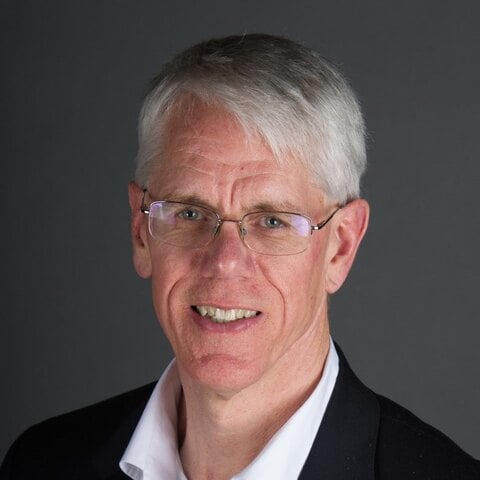
President and Founder of Rare Patient Voice, now part of Konovo
Questions research teams ask
Will it hurt my completion rate?
Will it hurt my completion rate?
A check turns some traffic away, but look at what it turns away: bots, duplicates, and survey farms that were never going to be quality completes. Real people clear the scan in seconds, a returning respondent is recognized without doing it again, and how strict it runs is tuned to your study. It is a lower cost per quality response, not just friction.
We already run attention checks and a bot filter. Isn't that enough?
We already run attention checks and a bot filter. Isn't that enough?
Keep them, they are cheap and worth running. But passive signals are easy to fake, and AI is now better at looking human than many people are, which is why teams come to us after the passive approach stops holding up. VerifyYou sits behind your existing checks, for the abuse that now clears them.
What about drop-off and my panel provider?
What about drop-off and my panel provider?
Place the check right before the incentive, so real people push through. Screen-outs are routed back to your panel’s disqualification path, so the exchange sees a clean end state and keeps sending traffic rather than stalling the audience. The success and screen-out redirects are both part of setup.
Is our respondents' data safe?
Is our respondents' data safe?
Your systems receive a verdict, never a face. The selfie becomes a face vector, a numerical representation of the face’s geometry, not a photo, and we do not store images. No name, no government ID, and no extra PII unless you explicitly turn identity sharing on.
What does it cost?
What does it cost?
Pricing depends on your volume and your use case, so there is no single number to quote here. Tell us what you are protecting and roughly how much traffic you expect, and we will size it with you. Book a chat for a quote.
Can we see it work before we commit?
Can we see it work before we commit?
Yes. Try the demo right now, no signup and no integration, exactly what your respondents would go through. When you are ready, the next step is usually a free pilot with a branded link you push to a batch of your own respondents.
Where to go next
What HumanCheck is
The plain explainer: the one question it answers, the two things it proves, and what it is not.
The problem, in numbers
How much of a panel is really bots, duplicates, and survey farms, in third-party figures.
How the check works
Liveness and uniqueness in a few seconds, and the honest boundary.
The respondent experience
The real screens a respondent sees, click to complete, and the demo.
The white paper
The Human Data Premium, the longer argument, with the charts and citations.